

by Will Giminaro
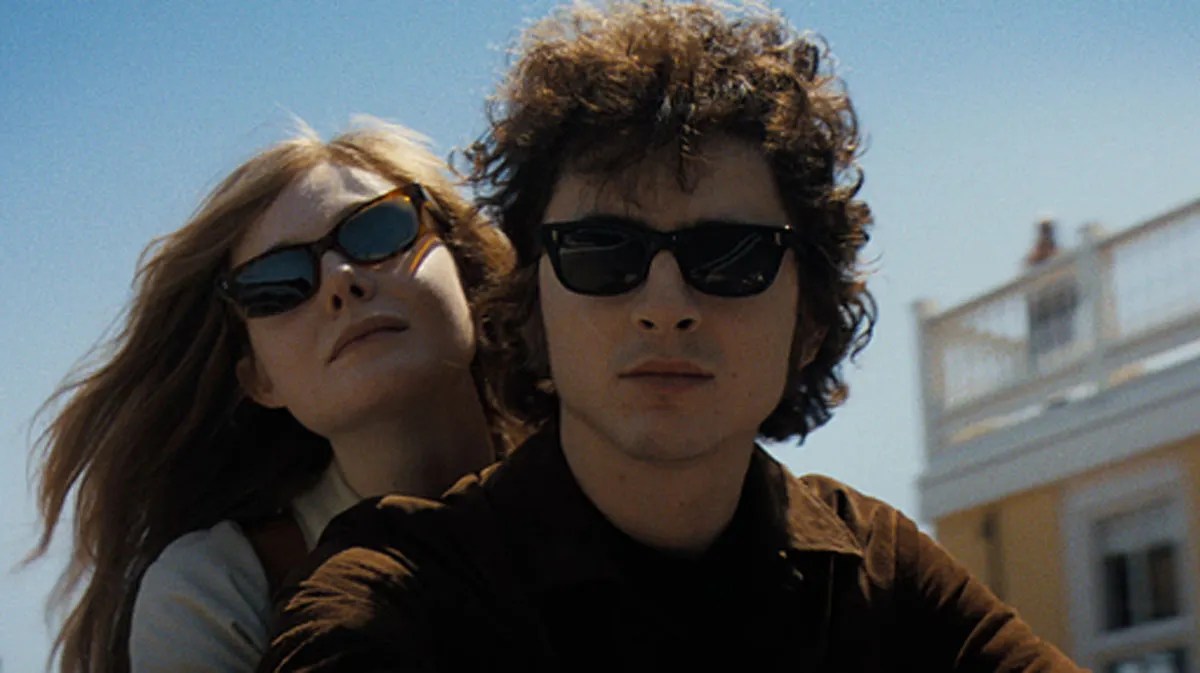
Timothée Chalamet’s portrayal of Bob Dylan isn’t just good — it’s revelatory. From the first moment he steps on screen, he is Dylan. The years of preparation, the meticulous study of Dylan’s accent, his serpentine body language, and his guarded yet electric presence all coalesce into something truly special. Chalamet doesn’t just mimic Dylan; he embodies him. His quiet intensity is magnetic, his eyes constantly flickering with thoughts he never fully says aloud. There’s an unspoken gravity to every glance, every half-smile, every pause before he speaks. You feel the weight of the artist’s inner world pressing down on him, and Chalamet carries it with ease.
But this isn’t a one-man show. Monica Barbaro’s arrival as Dylan’s former colleague and love interest is a revelation. Her performance feels so lived-in, so raw, that you forget she’s a newcomer to the big screen. She’s tender but sharp, unafraid to go toe-to-toe with Chalamet in their quiet, simmering scenes together. Her role could have easily been reduced to “the woman in the background,” but Barbaro gives her so much complexity and self-assuredness that you feel her presence in every scene she’s in, even when she’s silent. The push and pull of their dynamic feels all too real — the kind of love that lingers and complicates long after it should have ended.
Then there’s Edward Norton. If there’s a phrase more fitting than “return to form,” it would be used here. Norton plays Dylan’s mentor figure, a man brimming with quiet wisdom but also simmering frustration. It’s a restrained performance, but that restraint is what makes it so powerful. He doesn’t need to raise his voice to cut through a scene — he just exists in it, filling the space with an almost unbearable tension. Watching Norton interact with Chalamet is like watching two masters trade moves in a slow, deliberate chess match. Every word, every glance, every breath matters.
And yet, with all this powerhouse acting, A Complete Unknown stumbles where so many music biopics do: pacing. The second act feels like it’s walking in circles. Dylan’s romantic entanglements, while essential to the story, become a bit too drawn out, and the constant back-and-forth can feel exhausting. The emotional beats lose their power when they’re repeated one too many times. It’s like hearing a familiar verse in a song you love — it still sounds good, but you’re ready for the next line.
The film hinges on a monumental moment: Dylan’s decision to go electric at the 1965 Newport Folk Festival. It’s a moment steeped in legend, and the build-up here is substantial. Too substantial. The anticipation for that fateful performance grows and grows, and while it’s undeniably impactful, the journey there feels overly long. It’s a slow burn that could have been a steady flame. When Dylan finally steps onto that stage with his electric guitar, it should feel like the earth splitting in two. It’s powerful, yes, but after such an extended buildup, it lands with slightly less force than it should. You feel the moment, but you don’t feel it — not the way you did when it was first told to you in stories of Dylan’s rise.
Not every detour works either. The scenes with Johnny Cash, played by a perfectly chaotic and boozy guest star (whose identity is a delightful surprise), have moments of humor and unpredictability, but they ultimately feel like indulgent side quests. They’re fun while they last but leave you wondering if they were really necessary. It’s hard not to see them as padding in an already long journey.
What James Mangold does get right, however, is the vibe. The world of 1960s Greenwich Village and the broader folk scene is captured with precision. The smoky cafes, the dimly lit rehearsal rooms, and the quiet hum of creativity that seems to fill the air all feel palpable. The cinematography casts the entire era in a kind of golden haze — as if viewed through the lens of nostalgia itself. You feel like you’re there, tucked into the corner of a basement cafe, watching Dylan sing with the audacity of a man who already knows he’s a legend.
*Still, Mangold leans on the familiar music biopic tropes: the brooding artist torn between love and legacy, the “will he or won’t he” career-defining choice, the parade of celebrity cameos (albeit well-acted ones). It’s all well-executed, but it’s also ground that’s been tread before. The comparisons to Walk the Line are unavoidable, not just because Mangold directed both, but because they follow a similar narrative rhythm.” enhance Jesus Christ make it better

 newjerseyinstituteoffilm.com