

By Will Giminaro
Jesse Eisenberg’s A Real Pain is a remarkable blend of humor and heart, a film that masterfully balances wit with raw emotional depth. Anchored by the magnetic charm of Kieran Culkin, who shines as a lovable yet flawed jerk, the film offers a poignant exploration of grief, legacy, and the complexities of familial relationships. From its first moments, A Real Pain feels profoundly personal, as if each frame is imbued with a sincerity that lingers long after the credits roll.
The story’s premise—two estranged cousins embarking on a journey to Poland to honor their grandparents’ memory—serves as fertile ground for emotional discovery. It’s not just a trip across borders, but a journey inward, unearthing buried pain, unresolved tension, and unexpected moments of connection. Eisenberg’s direction is marked by restraint and subtlety. He’s not interested in over-explaining his themes or guiding the audience’s hand. Instead, he trusts the power of silence, letting quiet moments stretch just long enough to evoke discomfort, reflection, or the bittersweet ache of shared memory. It’s this patience that allows the film’s emotional beats to hit with such devastating precision.
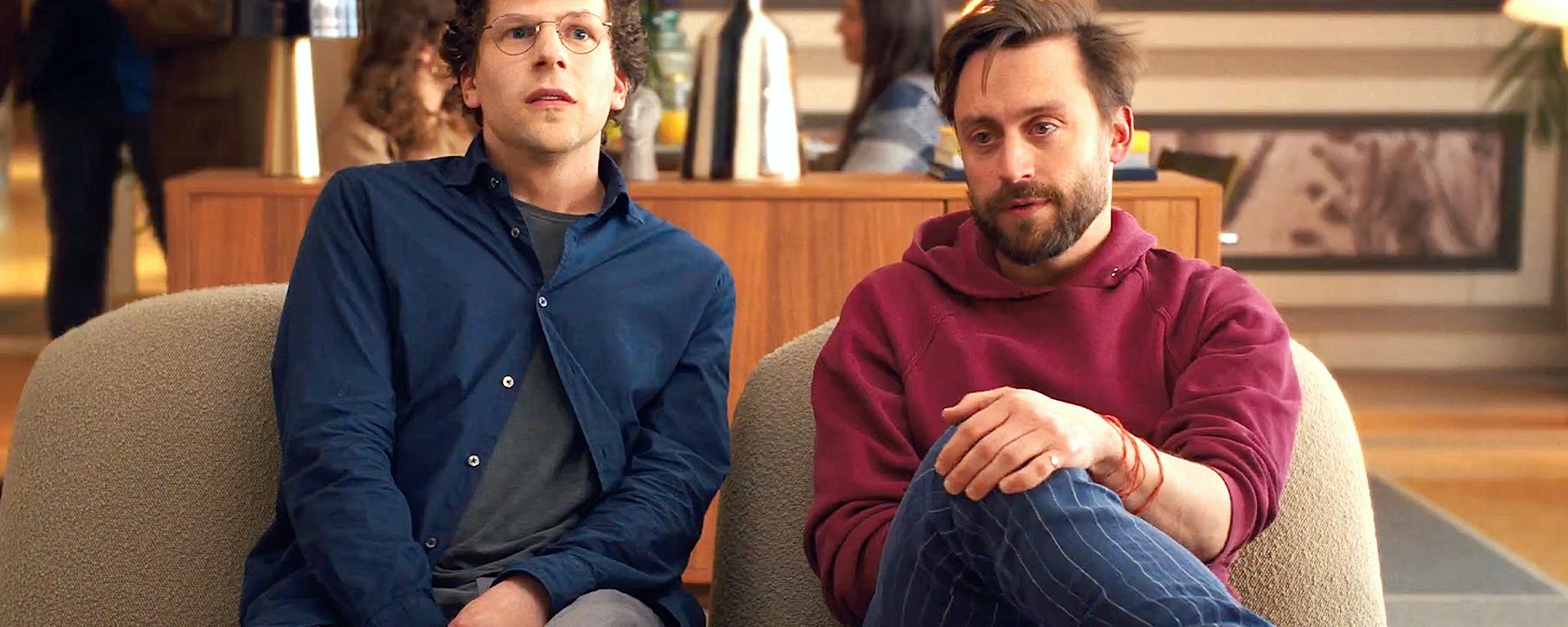
At the heart of it all is Kieran Culkin. His performance is a revelation—magnetic, disarming, and heartbreakingly human. He’s the kind of actor who can deliver a biting quip one moment and convey the weight of years of pain with just a glance the next. His character’s humor is a defense mechanism, one that’s slowly dismantled as the story unfolds. The dynamic between Culkin’s character and Eisenberg’s is electric, crackling with tension and tenderness. Their banter is sharp, layered with unresolved history, but there’s an underlying warmth that makes their connection feel lived-in and real. Their relationship is the beating heart of the film—messy, imperfect, and ultimately, deeply affecting.
One of the film’s most striking aspects is its sense of place. Poland’s streets, cemeteries, and quiet cafes are captured with a kind of reverence. The setting is more than a backdrop; it’s a character in itself, haunting and beautiful in equal measure. Eisenberg’s camera lingers on cobblestone paths and shadowed alleyways, evoking a quiet melancholy that mirrors the characters’ internal journeys. The visual storytelling is as compelling as the dialogue, with certain shots—like the image of two figures standing apart but framed together—lingering in the mind long after the film ends.
Then there’s the airport scene. Minimal dialogue, maximum impact. It’s the kind of sequence that’s difficult to describe but impossible to forget. No grand monologue, no sweeping score—just raw, unspoken emotion. Eisenberg’s choice to let the camera rest on the actors’ faces for just a moment longer than expected is a stroke of brilliance. Their expressions—fleeting, subtle—tell the entire story. It’s a scene that encapsulates everything A Real Pain does so well: the quiet, unspoken moments that speak volumes.
As a filmmaker, Jesse Eisenberg’s evolution is undeniable. His previous work hinted at his potential as a director, but A Real Pain feels like a declaration. His understanding of pacing, his ability to draw out layered performances, and his refusal to offer easy answers are all signs of a director in full control of his craft. This film is a culmination of everything he’s been building toward—a work that’s as thoughtful as it is entertaining.
Ultimately, A Real Pain is a film about memory, legacy, and the painful, beautiful process of connection. It’s about the quiet spaces between words, the laughter that bursts forth when everything feels too heavy, and the way grief can pull people together just as easily as it can push them apart. Eisenberg’s film doesn’t offer tidy resolutions or saccharine closure—it’s smarter than that. Instead, it leaves you with something far more lasting: the ache of something unresolved, something real.
Heartfelt, hilarious, and profoundly human, A Real Pain cements Jesse Eisenberg’s place as a filmmaker of great depth and subtle power. And in Kieran Culkin, he’s found a collaborator who’s unafraid to bare it all—the charm, the flaws, the messiness of being human. Together, they’ve created something unforgettable.

 newjerseyinstituteoffilm.com